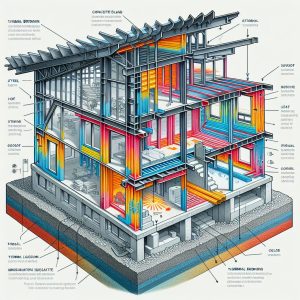
Types of Thermal Bridges in Buildings
Different types of thermal bridges have various implications for the
Traditional thermal modelling software can be complex, time-consuming and expensive; while the defaults allowable can often have a detrimental effect on the overall cost of construction required to meet regulations. This is often a challenge for technical teams, housebuilders, architects and SAP assessors. But with AutoPSI as your dedicated PSI value software, you can do PSI value calculations with speed and pass each regulatory assessment with ease.
Our efficient PSI value calculator software can determine PSI values quickly, without compromising on results.
PSI values are required by SAP/EPC building regulations to ensure that you comply with energy performance standards. They require a thermal bridging component, whether you include a separate PSI value or not. When using an assumed PSI value, you’re likely not going to pass.
A reliable PSI value calculation has many benefits:
Try AutoPSI today with a free 7-day demo and start streamlining your PSI value calculations.
From U-values to non-repeating thermal bridges, PSI values play a big role in building design. With AutoPSI, you don’t need to worry about how to calculate a PSI value, because the values you need are just a few clicks away.
Let AutoPSI uncomplicate the PSI formula for you — Sign up for a free demo to start using our innovative PSI value calculator today.
The AutoPSI thermal modelling tool was developed for the construction design industry.
Our technical services team has worked on many projects and designed linear thermal transmittance calculation tools and other bespoke software based on in-depth experience. With an affordable monthly or annual licence available in various packages, you can also take advantage of our easy-to-use and time-saving PSI value calculator and simplify your processes.
Streamline your SAP calculations to ensure your property will be meeting compliance standards — Try AutoPSI for free today.

Different types of thermal bridges have various implications for the

Accredited construction details (ACDs) are standardised details developed in 2002